


The word philosophy comes from the Greek philosophia: the love of wisdom.
To love wisdom is different from believing we possess it.
We see wisdom as something alive that we can lovingly cultivate. This means continuing to learn how to perceive more clearly, discern more carefully, and respond more wisely to the lives we are actually living. It means testing what we understand against experience, learning from and with others, encountering ideas that challenge us, and returning to familiar questions as we change.
Understanding can emerge through many ways of knowing: science and scholarship, reason and critical inquiry, inherited traditions, lived experience, the body, relationship, and the living world. Each of these domains contains wisdom; approached together, the potential is limitless.
Loving wisdom requires us to remain curious about what we have yet to understand, while growing more discerning about what we think we know.
For us, philosophy is an ongoing practice of learning how to live.
Whatever we believe about why we are here, what came before this life, what may follow it, or what existence ultimately means, this life is happening now.
We find ourselves here, in bodies, in relationship with other people and a living world. We experience pleasure and pain. We inherit circumstances we did not choose and make choices within them. We affect others and are affected by them. And the time available to us is finite.
So how might we live well?
How might we continue evolving and maturing, participate in ways that contribute to the lives and conditions around us, and experience more deeply the love, pleasure, beauty, meaning, relationship, and wonder that make being alive worth it?
At EMUNAH, these questions belong together.
A life well lived includes who we are becoming, how we participate in the world around us, and our capacity to experience and appreciate the life we are actually living. It also asks us to consider what our participation helps make possible for others and those who come after us.
A HUMAN LIFE IS MULTIDIMENSIONAL
A human life can be described through many dimensions: physical, psychological, relational, sexual, spiritual, ecological, cultural, and economic.
These categories help us focus attention, but none of them operates alone.
Our physiology affects how we think and feel. Relationships change our bodies. Culture shapes sexuality. Money enters our families, choices, and sense of possibility. Place and environment affect how we feel and function. Meaning changes how we experience hardship. Community influences health.
Each dimension participates in the conditions of the others.
The dimensions of a human life become more intelligible when we understand their relationships, rather than only their parts.
This is what we mean by Multidimensional Living
It is an orientation toward the whole person: learning to notice how different dimensions of a life interact, and how those relationships take shape within larger systems.
SYSTEMS WITHIN SYSTEMS
A human being is a living system within other living systems.
We develop as embodied beings within relationships, families, communities, cultures, economies, technologies, places, and ecologies. Each carries information and conditions that shape what becomes possible within the others. Influence moves in many directions at once.
Eco-Somatic Cybernetics is a framework Ganga Devi developed for understanding these relationships.
ECO
We exist within relationships, environments, cultures, communities, ecologies, and larger living systems.
CYBERNETICS
Living systems steer toward aims, and adapt and respond to feedback along the way. Cybernetics describes this process, and gives us framing to direct not only our own lives, but the trajectory of the world, more consciously.
SOMATIC
We experience these conditions through bodies. Our physiology shapes how we perceive, feel, respond, relate, and act.
PERCEIVE → ORIENT → ACT → RECEIVE FEEDBACK → ADJUST ↻
To steer the trajectory of our own lives, and our collective lives as humans, we must account for the whole.
We are shaped by conditions we did not choose. Our bodies, relationships, families, histories, cultures, environments, and material circumstances all participate in who we become.
And we participate in those systems in return.
As our awareness and capacities develop, we can perceive more of what is shaping us, recognize more of the effects of our own participation, and respond with greater choice.
We are neither completely self-determining nor simply determined by our conditions. We participate.
That participation can change us. It can change our relationships. And over time, it changes the initial conditions of the future.
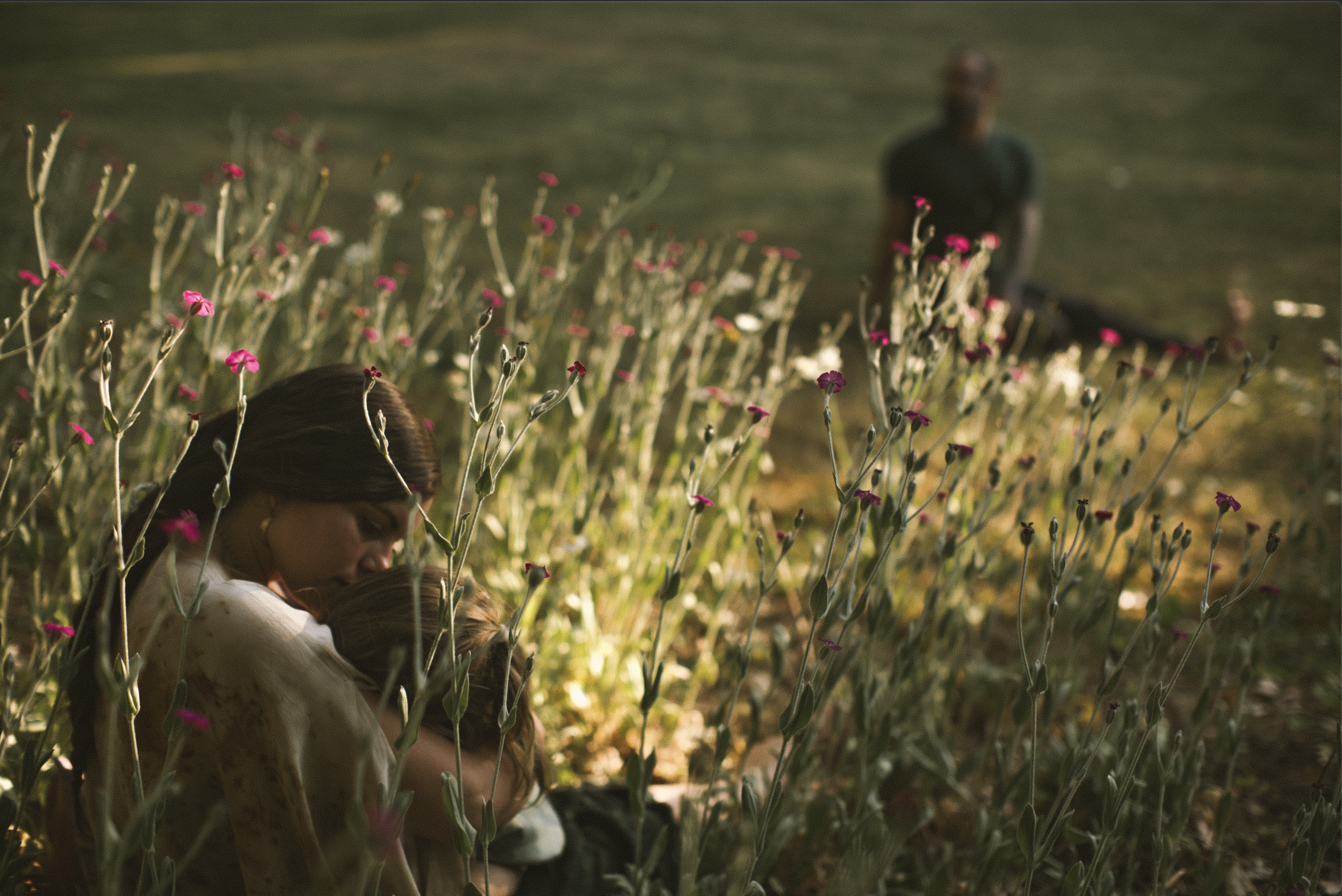
HOW DO WE KNOW?
A love of wisdom asks us to take seriously both what we know and how we know it.
Science and scholarship, reason and critical inquiry, inherited traditions, contemplative practice, embodied and lived experience, relationship, and the living world can each contribute to understanding.
They can also teach us different kinds of things.
A subjective experience can tell us something meaningful about what a person experienced. It does not automatically establish a universal truth.
Scientific inquiry can reveal extraordinary things about physiology and behavior while leaving questions of meaning, beauty, ethics, and purpose open to other forms of inquiry.
A contemplative tradition can offer a profound map of consciousness without needing to become laboratory science.
Intellectual rigor requires us to understand what kind of claim we are making, what supports it, and where its limits are.
This allows different forms of knowledge to enter into relationship without collapsing their differences. Science does not need to become spirituality. Spirituality does not need to become psychology. Metaphor does not need to become physiology.
Wisdom can emerge through the relationship among different forms of knowledge when we remain clear about what each actually allows us to know.

RHYTHMS OF A LIVING WORLD
Living systems move through rhythms.
Human bodies are rhythmic too: sleep and waking, hunger and satiety, exertion and recovery, arousal and resolution, attention and fatigue, development and aging. Our relationships, creativity, and emotional lives also move through changing periods of intensity, stability, disruption, and return.
We are cyclical organisms living within cultures often organized around linear expectations.
Day and night. Activity and rest. Growth and decay. Expansion and contraction. Disturbance and regeneration. Life unfolds through cycles of emergence, change, completion, and renewal.
CONTINUOUS AVAILABILITY / CONSISTENT OUTPUT / EXTENDED WAKING HOURS / PERPETUAL ECONOMIC GROWTH
Digital lives increasingly untethered from place and season. Meanwhile, bodies and living systems continue to encounter changing conditions, limits, beginnings and endings, activity and recovery.
Attending to these rhythms gives us information to interpret: information about timing, limits, change, and what our conditions are asking of us.
It can also change how we understand development. We revisit familiar questions at different stages of life. Capacities emerge, stabilize, become disrupted, reorganize, and deepen. Development can move through cycles and spirals as well as forward motion.
Within EMUNAH, this understanding influences how we approach learning and development, including attention to season, recurrence, return, and encountering familiar material differently over time.
Rhythm is part of how we understand living systems, development, regeneration, and participation in life.
Reality itself can become a source of education when we learn how to pay attention.
REALITY AS TEACHER
The Reality Reorientation Experiment is one way EMUNAH puts this philosophy into practice. It invites people into direct relationship with four teachers from the living world:
Each opens a different scale and quality of attention: deep time, rootedness, movement, perspective, relationship, change, possibility, and orientation. Together, they invite us to encounter realities that operate across rhythms and timescales much larger than the urgency of everyday life.
The experiment brings scientific, ecological, cultural, ancestral, mythic, poetic, embodied, and personal ways of knowing into relationship. We can learn about a tree and sit beneath one. We can understand the water cycle and feel water moving across our skin. We can study cosmology and walk outside at night to look up.
Knowledge about reality and direct relationship with reality inform one another.
The word experiment matters. We can try something, pay attention to what happens, and allow experience to deepen or challenge what we think we know.
STONES → TREES → WATERS → STARS
YOUR LIFE AS TEACHER
The same orientation extends into our own lives.
What nourishes us, drains us, steadies us, moves us, repeatedly captures our attention, brings us alive, or continues emerging over time can become information to work with.
Your IP’s is an EMUNAH methodology for noticing and gathering this information, discerning patterns within it, and allowing what we learn to participate in how we orient our lives. Within RRE, it becomes the bridge between relationship with the living world and the ecology of everyday life.
Our experience generates information. Attention, reflection, and discernment help us learn from it.
The world around us and the lives we are already living can both become sources of learning.
The Reality Reorientation Experiment is free and open to anyone who wants to experience this philosophy in practice.
We develop within a world we are also helping to shape.
How we communicate, love, parent, teach, work, create, use power, spend resources, repair relationships, and participate in our communities becomes part of the conditions other people encounter.
What develops within us changes what becomes possible between us. And what exists between us changes what becomes possible within us.
This is the systems proposition underneath Personal Development for Collective Evolution.
For us, this is also a spiritual orientation: the work of tending our own lives and the work of tending the world belong to one another.
Our individual development and our collective conditions continually shape one another. Greater awareness, capacity, discernment, and choice can change how we participate in our relationships, families, organizations, communities, cultures, and the living world. Changes within those systems can, in turn, create different possibilities for the people living within them.
Collective evolution emerges through this ongoing relationship.
But evolution alone is not the point. The question is what our development makes possible.
MORE HUMANE RELATIONSHIPS.
MORE JUST AND LIFE-GIVING INSTITUTIONS.
COMMUNITIES CAPABLE OF GREATER CARE AND BELONGING.
A LIVABLE EARTH.
Lives with greater access to love, pleasure, beauty, meaning, creativity, rest, play, relationship, and wonder.
This is larger than becoming better versions of ourselves. It is about contributing, together and across generations, to a world in which more beings have the opportunity to flourish.

Philosophia begins with a love of wisdom.
But wisdom becomes meaningful through how we live: through practice, relationship, experimentation, reflection, participation, and the ways we respond to what life teaches us.
The word academy traces back to the Greek Akadēmeia: the grove outside Athens where Plato and others gathered to inquire, learn, walk, converse, and study together.
Emunah Academy is our contemporary expression of that ancient idea: a place to practice the work of living and learning together.
The philosophy continues there through educational experiences, community, conversation, embodied practice, experimentation, and the ongoing encounter between what we inherit, what we discover, and what we create together.